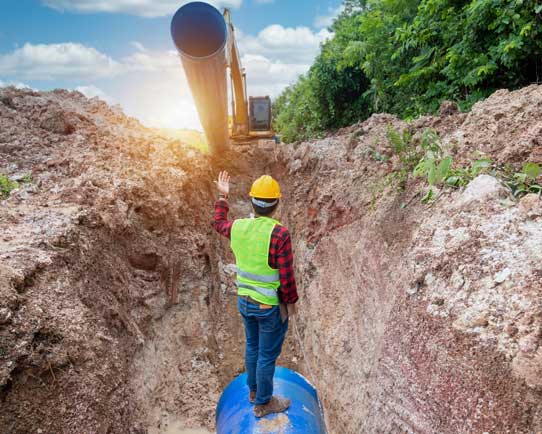
Drainage: Get a free quote • Fast response
Drainage
Are you experiencing damp basement walls, mold or water accumulation around the house? Then poor drainage could be the culprit. Many homeowners face challenges with moisture damage but are unsure of both solutions and costs.
Here’s an overview of everything you need to know about drainage – from basic information to specific price examples and practical advice for your drainage project. You can also get a free, no-obligation quote from an excavation contractor in your area.
Get a free quote for drainage
Send us a short description of your wishes and needs, and we’ll help you find the best suited excavation contractor for your particular job.
Your contact information will only be used in connection with the request. Your personal data will not be disclosed to unauthorized persons.
What is drainage?
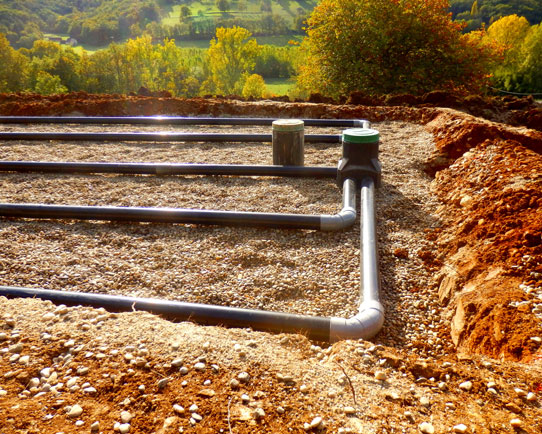
Drainage is a system that controls and directs excess water away from buildings and surrounding areas. The system mainly consists of drainage pipes, filter materials and nonwovens that together create efficient waterways.
When it rains or the snow melts, the drainage collects the water and directs it safely away from the building’s foundation and basement walls. This prevents moisture damage, mold and fungus, and protects the building’s structure from frost heaving and subsidence damage.
Good drainage is very important in Norway, where we have a lot of rainfall and varying temperatures throughout the year. Without proper drainage, you run the risk of water penetrating the basement or moisture damage to the foundation.
Is drainage necessary?
Drainage is essential if you experience signs of moisture problems in the basement or around the house. Typical warning signs are moldy odors, salt deposits on basement walls, or puddles that remain around the building. Even if your house doesn’t show visible signs of moisture problems now, poor or missing drainage can lead to extensive damage over time.
This is especially true of older houses where the original drainage may be outdated or damaged. Preventive drainage is often far less expensive than repairing moisture damage after the incident.
How much does drainage cost?
The cost of drainage varies significantly based on the scope and complexity of the project. For a standard drainage project, you can expect to pay in the range of NOK 4,500 to 10,000 per linear meter. This normally includes the cost of excavation, new drainage pipes, filter materials, and the labor to put everything in place. Some projects can be more expensive if special measures such as rock blasting are required or if ground conditions are challenging. It’s important to remember that drainage is a long-term investment in your home and that quality work pays off in the long run. The prices we quote are indicative, and the final cost will depend on an inspection and specific assessment of your project.
Drainage house price
For a drainage project around a standard residential house, the price is usually between NOK 200,000 and 400,000. This includes excavation around the entire house, new drainage pipes, drainage materials and necessary sealing of the foundation.
Prices may vary based on ground conditions and availability.
Drainage garage price
Drainage of a detached garage typically costs between NOK 100,000 and 200,000. The price depends on the size of the garage and whether it needs to be connected to an existing drainage system.
Easier access and less extensive work often make garage drainage more affordable than house drainage.
Garden drainage price
Garden drainage usually costs between NOK 50,000 and NOK 100,000, depending on the size of the garden and ground conditions. This includes digging trenches, laying drainage pipes and adding new soil.
For larger gardens or complicated conditions, the price can increase significantly.
What affects the price of drainage?
-
Ground conditions on the site
Whether it’s rock that needs to be blasted or unstable clay soil that requires extra protection, this will increase the cost significantly. -
Machine accessibility
Tight sites or difficult access means more manual work and longer time spent, which drives up the price. -
Scope of the project
The size of the area to be drained and whether there is a need for additional work such as: Insulation of the foundation wall, establishment of new drains, and connection to the municipal network. -
Mass replacement
The amount of mass that needs to be removed and replaced with new drainage mass affects both labor and material costs. -
Material quality
The choice of drainage pipe, insulation and other materials affects the total cost. -
Season and capacity
The peak season for drainage is typically spring and summer, which can affect both availability and price.
How long does drainage last?
A professionally executed drainage system usually has a lifespan of 30-50 years, provided the work is done correctly and with high-quality materials. There are several factors that affect how long the drainage works optimally. Soil type and ground conditions play a significant role – areas with a lot of clay or high groundwater levels can put more strain on the system. The amount of precipitation and surface water that the system has to handle also affects its lifespan.
Regular maintenance, such as flushing drain pipes and inspecting manholes, can significantly extend the life of the system. It’s important to be aware of early signs of failing drainage, such as increasing moisture problems or water accumulation. Addressing problems early can often prevent extensive damage and further extend the life of the drainage system.
Different types of drainage jobs
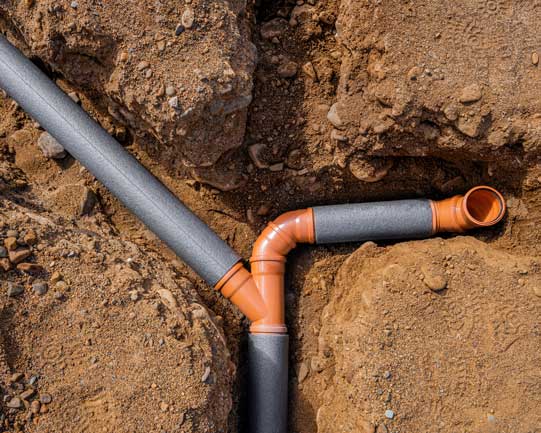
Drainage work comes in many shapes and sizes. The most common assignments include drainage around houses, garden drainage, and drainage of garages or outbuildings. Each project has its own unique challenges and solutions, from simple surface drainage to extensive foundation work with new drainage pipes and soil replacement.
Drainage around houses
Drainage around houses is the most extensive drainage work and involves digging around the entire foundation of the house. The work includes removing old materials, laying new drainage pipes, installing foundation slabs and backfilling with drainage materials. This ensures effective water drainage and protection of the house foundation.
Garden drainage
Garden drainage is about diverting surface water and preventing water accumulation in the garden. This is achieved through strategically placed drainage pipes and slopes in the terrain. Good garden drainage is particularly important for avoiding wet lawns, protecting plants and preventing water from flowing towards the house foundation.
Garage drainage
Garage drainage follows the same principles as house drainage but is often less extensive. The work involves establishing drainage ditches around the garage, laying drainage pipes and connecting them to an existing system or a separate drainage sump. This protects the garage from moisture damage and subsidence.
Drainage of the lawn
Drenering av plen er viktig for å unngå vannsamlinger og sikre et sunt vekstmiljø for gresset. Dette gjøres ved å legge drensrør under bakken og skape riktig fall i terrenget. God plendrenering gjør hagen mer brukervennlig og hindrer at gresset drukner i perioder med mye nedbør.
Drainage and insulation of foundations
Ved drenering er det vanlig å samtidig isolere grunnmuren for å oppnå optimal beskyttelse. Dette innebærer montering av grunnmursplater og isolasjonsmateriale før tilbakefylling. Kombinasjonen av drenering og isolering gir både fuktsikring og energibesparelse.
How to check drainage?
To check your drainage, you should carry out regular inspections, especially after periods of heavy rainfall. Start by checking the basement for signs of moisture ingress – look for salt rashes, mold smell or damp spots on walls and floors.
Also check the area around the house after heavy rainfall. If water is left standing for more than 24 hours, this may indicate drainage problems. Inspect the drains and check that the water flows freely. Look for settlement damage in the foundation or cracks in the basement floor, as this may indicate water-related problems.
If problems are suspected, it is recommended to have a professional carry out a thorough inspection of the drainage pipes using camera equipment. This provides a detailed overview of the condition of the system and can reveal any damage or blockages.
How deep do you have to drain?
In Norway, there are strict requirements for drainage due to climatic conditions. Drainage pipes must be laid at a frost-free depth, which usually means between 80 and 120 centimeters below ground level. In areas with particularly cold winters, it may be necessary to go even deeper, up to 150 centimeters.
It’s not just the depth that’s important – the drainage pipes must also be laid with the right slope, minimum 1:100, to ensure efficient water transportation. Around the pipes there should be a layer of drainage material of at least 10 centimeters. Filter cloth is laid over this layer to prevent fines from clogging the system.
The slope around the building must also be carefully planned, with a slope of at least 1:50 away from the foundation wall for the first three meters. This ensures that surface water is efficiently directed away from the building.
Receive a quote for drainage
There are many excavation companies to choose from. Getting quotes can be a time-consuming and sometimes complicated process. Prices and the quality of the work carried out can vary from contractor to contractor, and it can be difficult to know what to focus on when choosing a contractor for the job.
If you want to save time and effort finding the right excavation contractor for your project, you can use our service. We work with skilled excavation companies all over the country, with good references and feedback from previous customers.
Fill in the form on our website with your contact information and a brief description of the job, and we’ll get in touch with the excavation contractor in your area who is best suited to the job. Our service is free and completely non-binding.